Insight Category: Insurance
The Industrialization of Trusted Intelligence, Data Governance, and AI in Insurance

Modern insurers are investing heavily in cloud and AI, yet still struggle to turn data into trusted, decision-ready intelligence. Fragmented systems, inconsistent metrics, and weak governance continue to slow decisions across underwriting, claims, and regulatory reporting.
Exavalu’s Exasure Datalytics™ addresses this by transforming fragmented data into enterprise-trusted, AI-ready intelligence through a modular cloud-native framework with built-in governance, metadata-driven ingestion, and semantic alignment, enabling scalable analytics and AI without repeated rebuilds.
The Emergence of GenAI-Powered Quality Engineering in Insurance Platforms

Automated and Autonomous – Building Mature Software Engineering Ecosystems

Modern IT Systems Need Nuanced Thinking
Adaptation without consideration has become a ‘shiny object syndrome’ in software engineering. Take automation as an example – “my regression bed includes 20,000 test cases: automate everything”. “Each month I am adding 10% to the repository: Keep automating”. This approach conveniently ignores the fact that automation % is just a number. You really need a technology-centric approach to make sure that you safeguard your business at an optimal cost, while also ensuring an early mover advantage with your products every single time. In the same way, AI adoption is now becoming the new El Dorado. Do something to claim that your software engineering system has become Artificially Intelligent. However, software engineering actually needs a thoughtfully architected AI framework to make your business truly resilient and maximize the benefits of AI. Thus, your software engineering approach needs to be Automated and Autonomous at the same time.
Automated. Autonomous. The Choice Lies in Your Strategy
Automation means an ability to execute a pre-defined sequence of events repeatedly. The framework is repeatable but restricted. The automation architects program the system to act based on pre-defined steps and intended outcomes.
The power of this is in the Repeatability and Speed underlying the power of automation. As an example, test automation frameworks take pre-defined test data and test scenarios and use opensource architectures to create batches of test entities (insurance policies as an example) which can support expected outcomes from a system validation perspective. Autonomous systems, on the other hand, continuously learn- they learn from their environments and adapt to them. As environments change, autonomous systems also evolve. With a defined starting point, the system can not only perform but also advise and recommend in an evolutionary way. As an example, the solution can identify business functionalities impacted by specific code changes and, over time, improve with accuracy and speed. Most importantly, automated and autonomous systems complement each other. A truly mature IT shop will view these solution options as part of a single continuum, flexibly emphasizing one or the other depending on the context. Use case identification and a long-term strategy that supports business resilience and acceleration will determine the right mix of automation versus autonomy in your systems.
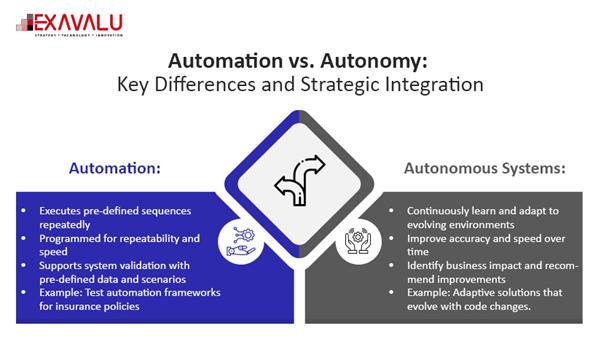
A Strategic Approach to Leveraging Automated and Autonomous Solutions
At Exavalu, we view software engineering not as a set of disparate, isolated islands of requirements, development and QA activities, but as a continuous flow of data supported by technology to build intelligent and resilient products. We help our clients use this approach to gain speed to market advantages over their competitors. Exavalu has pivoted to a composite solution framework comprised of both autonomous and automated accelerators applicable across the entire SDLC. Our framework strengthens coverage, boosts acceleration, and builds intelligence into applications.
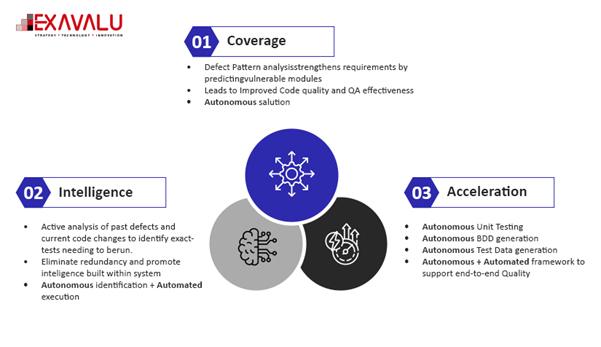
This solution framework relies on in-depth analysis of business coverage requirements, engineering acceleration needs, AI-centricity, and the right balance of autonomous and automated solutions.
Summary
To ensure business agility and resiliency, Exavalu is working with clients to utilize the power of AI to drive autonomous/intelligent solutions. We use a pragmatic approach to determine which use cases require predictable and repeatable solutions, versus intelligence and adaptation, to gain an edge. This requires an in-depth understanding of both the business and technologies. Exavalu’s AI-powered software engineering framework will help you build resilient and intelligent systems, with flexibility for the effective use of autonomous and automated solutions.
About Author:
Moulinath Chakrabarty is a client executive partner with Exavalu’s Insurance practice. He has 20+ years of Insurance experience, and specializes in advising Insurance carriers on best practices for driving digital transformations with Insurance core products at the center of such initiatives. You can reach him at Moulinath.Chakrabarty@exavalu.com
A Personal Lines Insurance Company Achieves 300+% ROI By Modernizing Its Marketing Operations

A large personal lines insurance company wanted to modernize its customer acquisition and retention processes, so they approached Exavalu for expert advisory services.
A Major US P&C And Life Insurance Carrier Achieves Highly Efficient Sales Operations With A Digital-First Approach

In an increasingly competitive insurance landscape, efficient sales operations are critical to success. However, a leading US P&C and Life Insurance carrier found itself constrained by outdated processes, scattered data, and a lack of automation. Their sales teams faced significant inefficiencies, making it difficult to manage territories, track productivity, and communicate effectively.
Recognizing the need for a modern, digital-first approach, the client partnered with Exavalu to streamline agency onboarding, enhance productivity tracking, and introduce integrated communication and reporting capabilities.
From Legacy To Modern Lead Management System: Achieving Sales Excellence For A Multi-Line Insurer

As an independent multi-line insurance provider, our client offered personal, automobile, homeowners, renters, and business insurance across multiple states. However, their large-scale operations were hindered by legacy systems, creating inefficiencies in lead management and distribution. To modernize their technology landscape, they partnered with Exavalu for expert digital advisory and the establishment of a Salesforce Center of Excellence (CoE).
Turning Data Into Capital: Impact Of Modern Data Platform on The Insurance Industry

The insurance industry is facing rapid changes in broker relationships, customer demands, market conditions, and organizational structures. These changes have made it difficult for existing data warehouses and the teams responsible for them to keep up with the changes to the data sources and new data sets collected from newly implemented systems, mergers, and acquisitions. The challenge is to address this evolution while also meeting the changing analytical needs of the enterprise and maintaining the business status quo. This challenge has led to the industry-wide realization that traditional data warehouses are no longer sufficient to meet the needs of the users. To meet current and future business requirements, insurers are looking for more agile ways to access internal and external information.
By adopting a modern data platform and strategies., Insurers can transform all data-related processes and tear down the siloed data sources to enrich and democratize their analytics capabilities. To overcome data processing obstacles, insurance companies need to fundamentally reevaluate their data and analytics strategies and implement modern technological foundations like-
- Cloud Technology allows access to powerful tools and resources for storing, processing, and analyzing large amounts of data and ensures the protection of sensitive information,
- Cloud-based Data Lakes for real-time processing and analyzing complex data sets,
- Artificial Intelligence and Machine Learning Models on the cloud that improves straight-through processing and improve product development and predictions, and lastly,
- Strong Data Governance Protocols to improve data quality and implement data protection and security solutions that improve compliance and security.
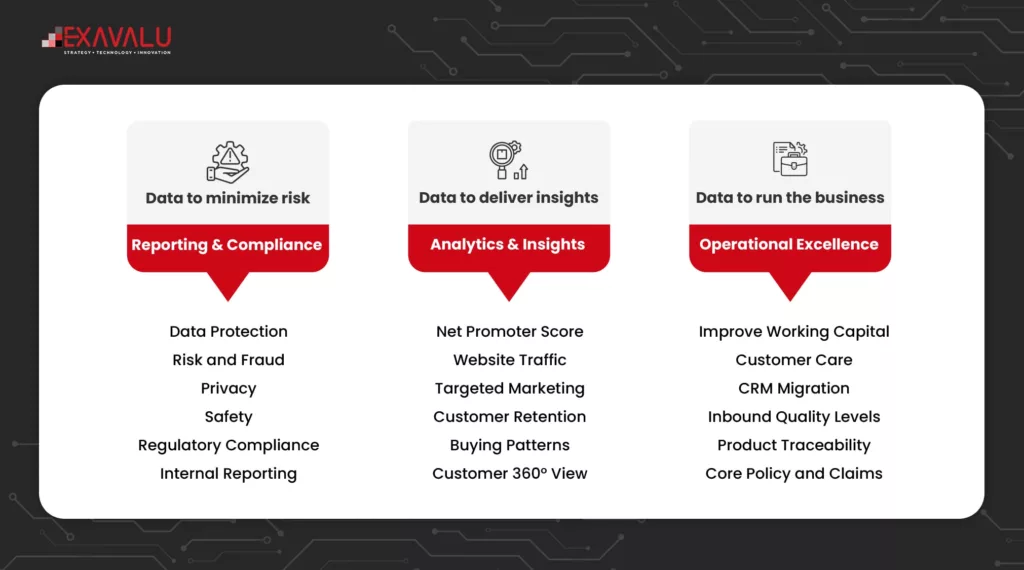
Implementing modern technological foundations in support of data management practices will help insurance carriers to transform every aspect of business operations as illustrated below-
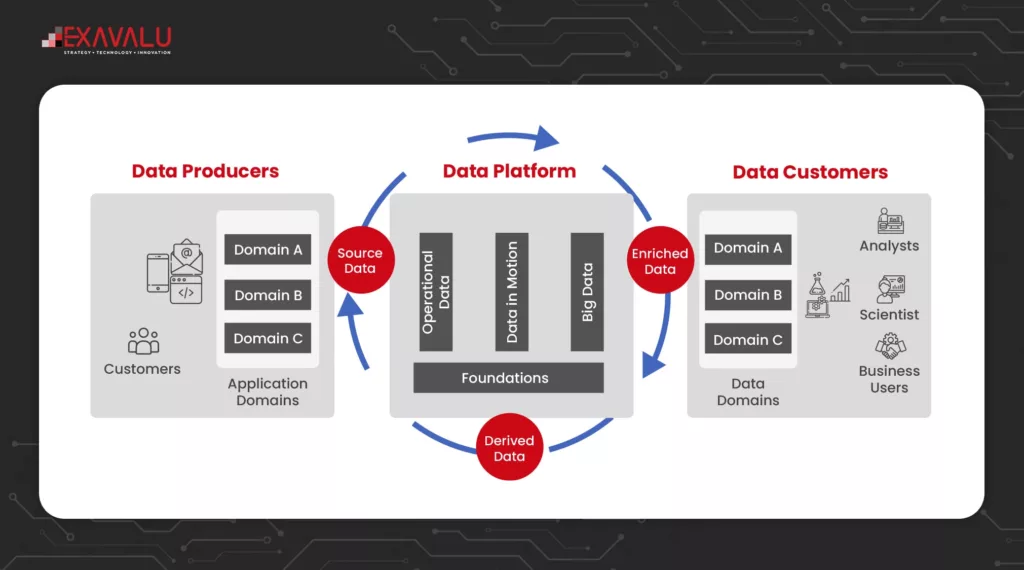
Over the years, Exavalu has worked extensively with leading insurance industry clients, which has given us ample expertise and experience. Based on these, we have formulated a set of fundamental concepts and essential principles insurers can use to elevate their data operations and drive better growth for their business.
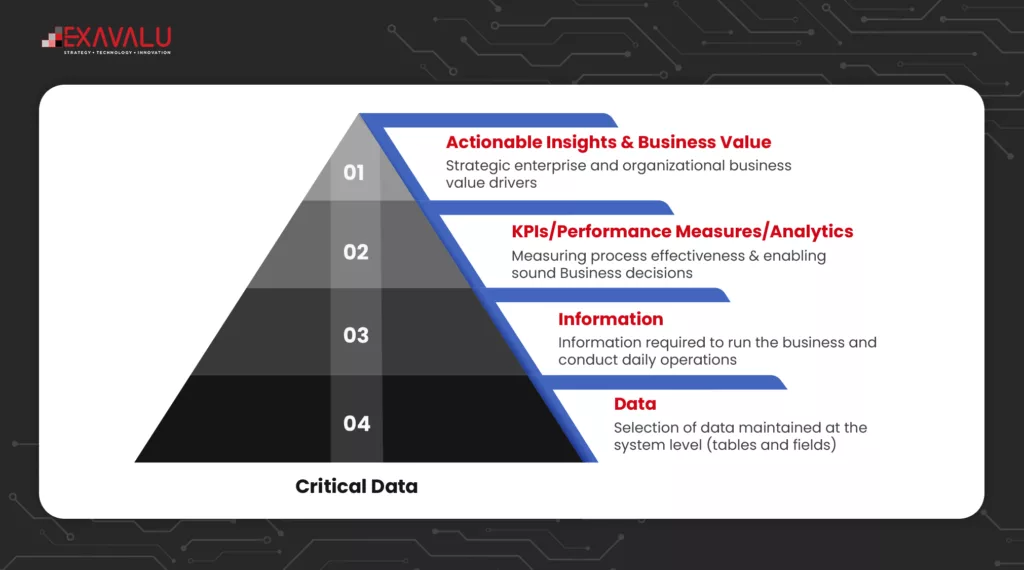
Now let us take a detailed look at why traditional data warehouses are failing.
Traditional Data Warehouses: Why Are They Failing?
There are five key challenges inherent in traditional data warehousing: an inflexible and complex structure, slow performance, lack of elastic capacity, outdated technology, and a lack of modern data governance.
Inability To Adapt To Changing Needs
The rigidity of Traditional Data Warehouses (TDWs) often prompts organizations to acquire additional hardware and tools to meet their data requirements promptly. This patchwork of hardware, tools, and software results in a complex and redundant architecture with multiple data siloes, unable to adapt to the changing needs of the carriers.
High Costs And Failure Rates
TDWs are infamous for their high failure rates, with some reports indicating and failure rate of over 50% according to Tim Mitchell, a data architect. These failures are not solely due to technical challenges or complex architecture but also stem from a failure to meet user requirements and needs.
Inefficiency And Slow Processing
The amount of data that businesses need to store, process, and analyze has grown dramatically in recent years. This increase in volume can have a significant impact on the performance of TDWs, resulting in slow performance and delays in reporting.
Obsolete Technologies
Traditional TDWs are far behind modern technology, as they were set up years ago, therefore unable to deliver capabilities around scalability, and enhanced storage.
Insufficient Governance And Control
TDWs present significant governance and control-related issues that prevent insurance organizations from implementing an IT structure that can quickly adapt to meet the changing demands of the customers.
Importance of Adaptation
Many IT and insurance analysts and industry experts believe that data warehousing is an essential component of modern business. However, the traditional solutions are no longer adequate. The emerging data sources, trends, and technologies are challenging the effectiveness of data warehouses for supporting analysis and decision-making. However, IDC states that Data Warehouses are not going away and still have a key role in an organization’s data architecture, making adaptation crucial.
Not adapting to these changes can be costly for insurers. For example, without integrated data and advanced analytics capabilities, Insurers will miss opportunities to improve their competitive advantage or eliminate risks, lack relevant insights, and weaken their brand. This will lead to losing customers and ultimately, lost revenue and the collapse of the company. The solution to these challenges is a modern data platform.
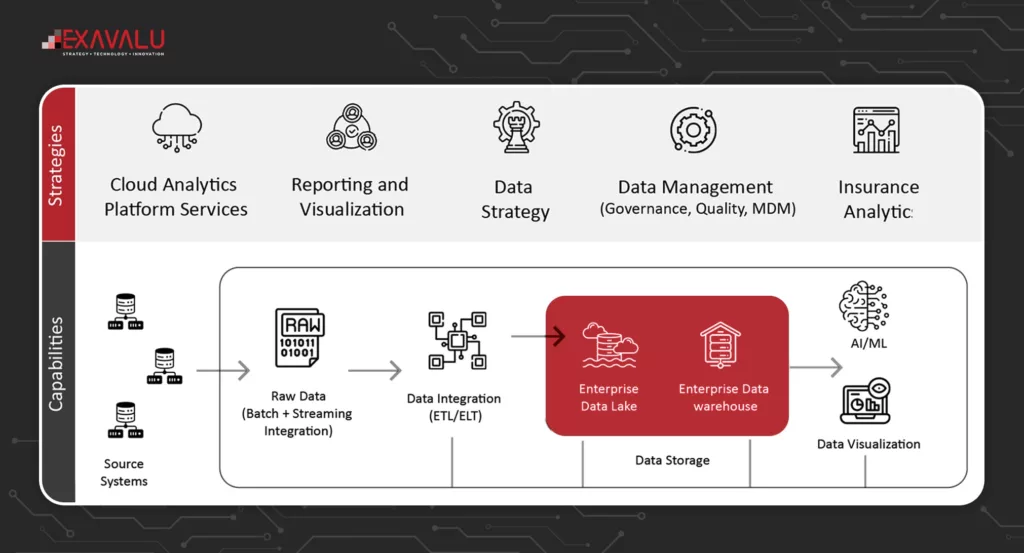
Modern Data Platforms are needed to enhance Analytics Strategies
Insurers of all sizes need a data platform that allows them to adapt to changing business needs and manage the growing amount of data. Today the Insurers need to have self-service for Diverse Users along with Agile Data management.
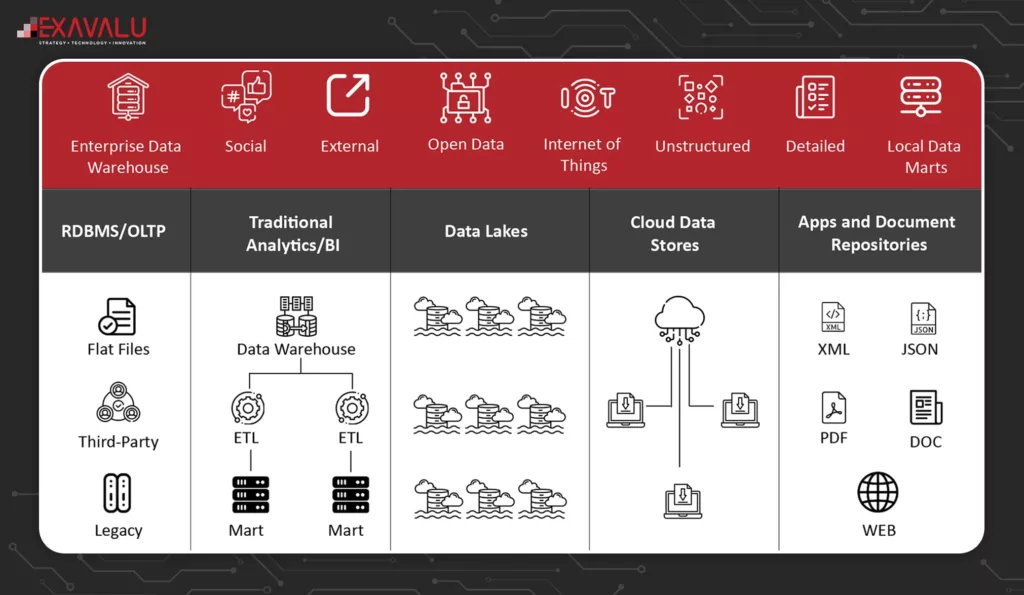
The platform must be flexible and responsive, with standardized processes and a single source of truth to support predictive and prescriptive analytics. It should use modern cloud data management software and high-performance and elastic hardware. Specifically, insurers require a data pipeline that can capture and store large amounts of data from various internal and external sources, including social media and text logs. They need the ability to process data in memory for quick reporting and real-time insights. Tiered storage for easy access to data when needed, such as for financial audits. Compatibility with all business intelligence processes for easy access by business users, and advanced analytics capabilities for deeper claims insights, connected opportunities, and improved pricing and risk management.
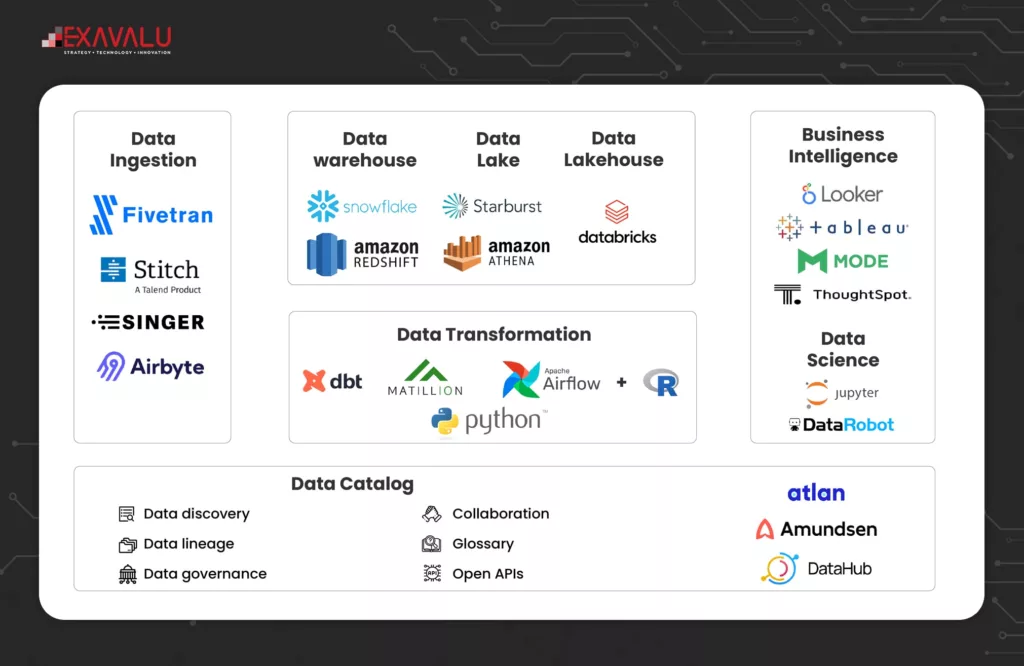
Insurers need a data platform that can adapt to changing business needs and handle the growing amount of data. These platforms offer advanced database and data management technologies, analytical intelligence capabilities, and intuitive application development tools on a single, unified in-memory platform. Such a platform facilitates high-performance advanced analytics that can access data stored within Hadoop. Modern platforms provide enhanced high availability, security, workload management, enterprise modeling, data integration, and data quality. Additionally, these platforms enable logical data warehousing, which reduces the need for ETL and aggregated data and can store and analyze data regardless of its source, form, or structure.
This shift away from traditional ETL to the extract, load, transform paradigm (ELT) allows faster loading time. The platform also enables smart data access, making it easier to organize and display unstructured data as if it were structured. Modern analytics platforms provide high performance through in-memory processing, accelerating the speed of data preparation and consumption processes, and reducing disk bottlenecks. The virtual models in the platform allow for in-situ analysis, reducing the need to move data around and eliminating tasks such as aggregation and duplication. Its compatibility with powerful integration tools enables faster data delivery and loading.
This is future-proof technology that can meet the demands of modern insurers through big data and IoT. It has been designed specifically to overcome these challenges and drive performance. The platform can be hosted in the cloud, allowing for a “pay-as-you-grow” basis and supporting new insurance product/business development, which reduces capital expenditure and financial risk. It also supports a tiered data architecture that can help organizations avoid archiving potentially useful data. Additionally, it provides full control and governance through comprehensive security and auditing functions, enabling multitenancy solutions for controlled access to data and reducing potential issues arising from mistakes and complications. The platform also delivers data quality, and visibility into data lineage, and presents it on a graphical user interface.
Principles for moving forward
- Design for scalability and flexibility– the architecture should enable on-demand computation performance, allow the business to access and utilize data independently of IT, and utilize cloud technology to enable the organization to easily scale up or down as computing needs change.
- Make metadata a priority from the beginning– leveraging metadata, and information about the data they hold can provide insurers with deeper insights and context. However, metadata extraction often becomes an afterthought, driven by compliance requirements. Managing metadata early is much easier, and its value can extend far beyond compliance. With cataloged metadata companies can create a library of data sets that can be accessed by everyone in the organization, thus enabling wider use of insights generation and AI throughout the enterprise.
- Implement a unified security model for data– companies often use complex hybrid environments that blend cloud-based and on-premises services, with data stored in various locations and accessed by various individuals and systems. A unified security approach allows companies to consider security from the point of data creation to all points of consumption and during all stages of data enrichment.
Conclusion
Many insurance companies have implemented data warehouses and analytical applications, but they often fall short of meeting the demands of a rapidly changing business environment. This is primarily due to inflexible structure, complex architecture, slow performance, outdated technology, and lack of governance. These issues impede an insurer’s access to reliable data and their ability to make well-informed, forward-looking decisions. Without this, insurers risk losing customers in soft and emerging markets and miss opportunities for enabling their human capital’s ability to utilize data and analytics to improve decisions and processes. A modern data platform can help insurers overcome these challenges, allowing for new products and services to be developed without disrupting the existing IT landscape.
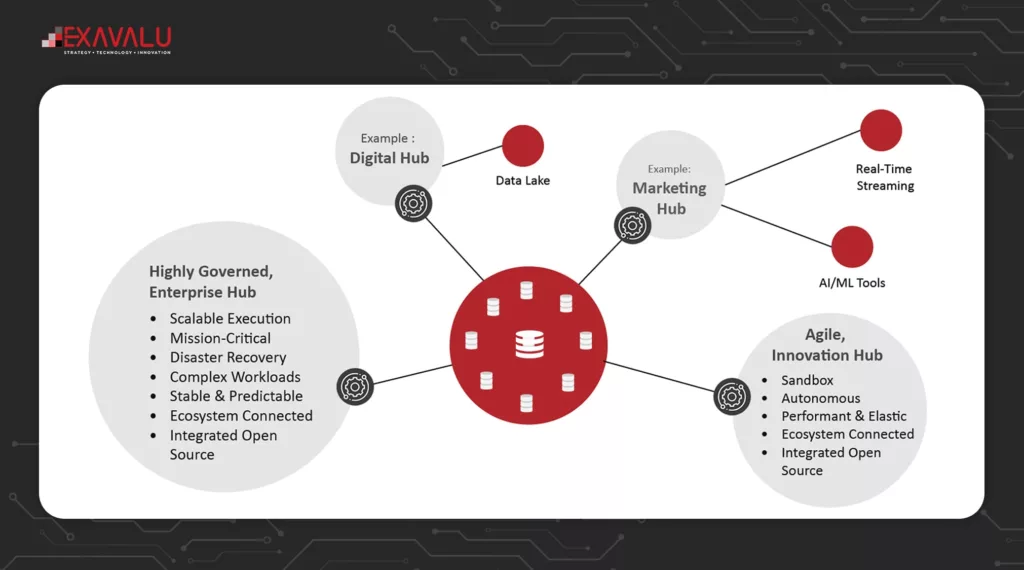
With a more flexible structure and compatibility with leading-edge technology, the modern data platform is equipped to handle today’s constantly changing data requirements. Its simplified architecture streamlines the process from data capture to actionable insight, reducing decision lag. Furthermore, it delivers these benefits without compromising on governance requirements and can serve as the foundation of a data governance strategy that can be extended throughout the enterprise.
To turn data into capital, insurers must identify mission critical priorities and critical success factors and map their business initiatives to specific outcomes with quantifiable impact. The strategies must fundamentally address the needs of the business across all areas:
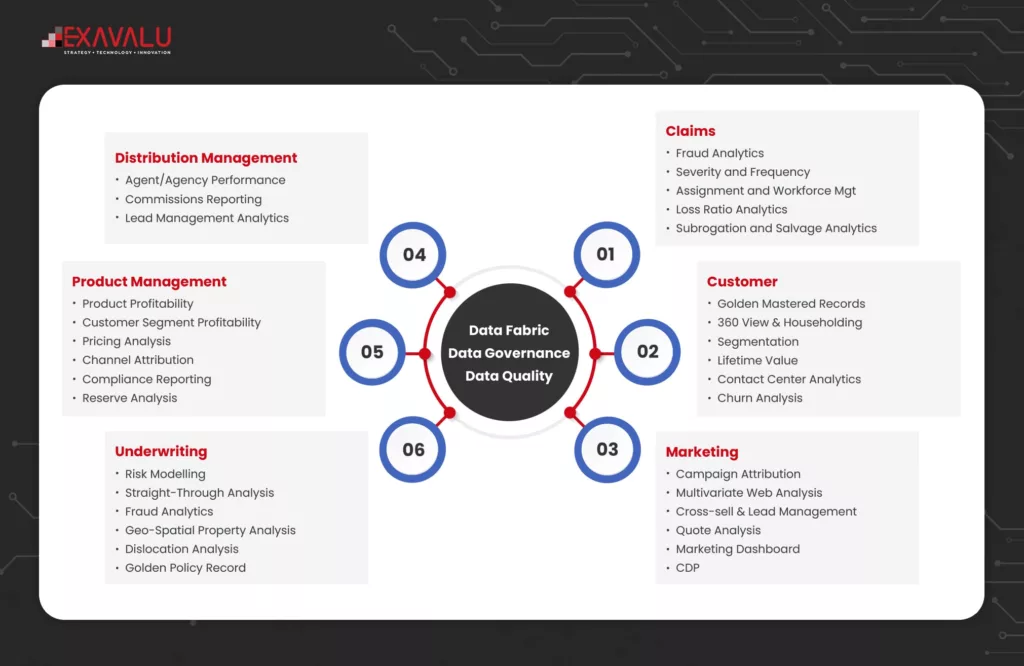
Strategies such as mastering data about customers, agents, assets and claims data can promote significant upside with cross sell opportunities and improved customer experience. Data driven enterprises embed data in every decision, interaction and process in real time. Treating Data as a product and utilizing ready- to-use-data while preserving data quality, privacy and security requires a data driven culture that is supported by modern data fabric.
About the Author
Rahul Chakladar is a Consulting Manager with Exavalu Data and Analytics Practice. He has more than 16 years of experience in Management and Strategy consulting. He has worked extensively worked across industries such as Insurance, Banking, Retail and Consumer Packaged goods. You can reach him at Rahul.Chakladar@exavalu.com
How Exavalu Delivered An Efficient Lead Management System And Increased Agent Users by 41%

A leading personal lines insurance company wanted to modernize its lead management system and drive better business outcomes. They were looking for a proficient technology partner who could provide strategic direction, development expertise, and governance, so they partnered with Exavalu.
Revolutionizing Insurance Operations with MLOps Scalability: The Path to Unparalleled Growth & Efficiency

The insurance industry is undergoing significant changes due to the emergence of new risks, advancements in technology, availability of external data, and shifts in consumer preferences. This presents opportunities for insurers to use data and insights to improve operations, personalize products and services, and compete in new ways. To stay competitive, insurers must move quickly to drive AI-driven innovation and improvements while addressing these risks. One way to do this is to focus on DataOps and MLops, popularly known as XOps, which is the ability to iterate quickly and effectively across the entire lifecycle of algorithmic models. This allows insurers to track their progress and become a more data-driven business.
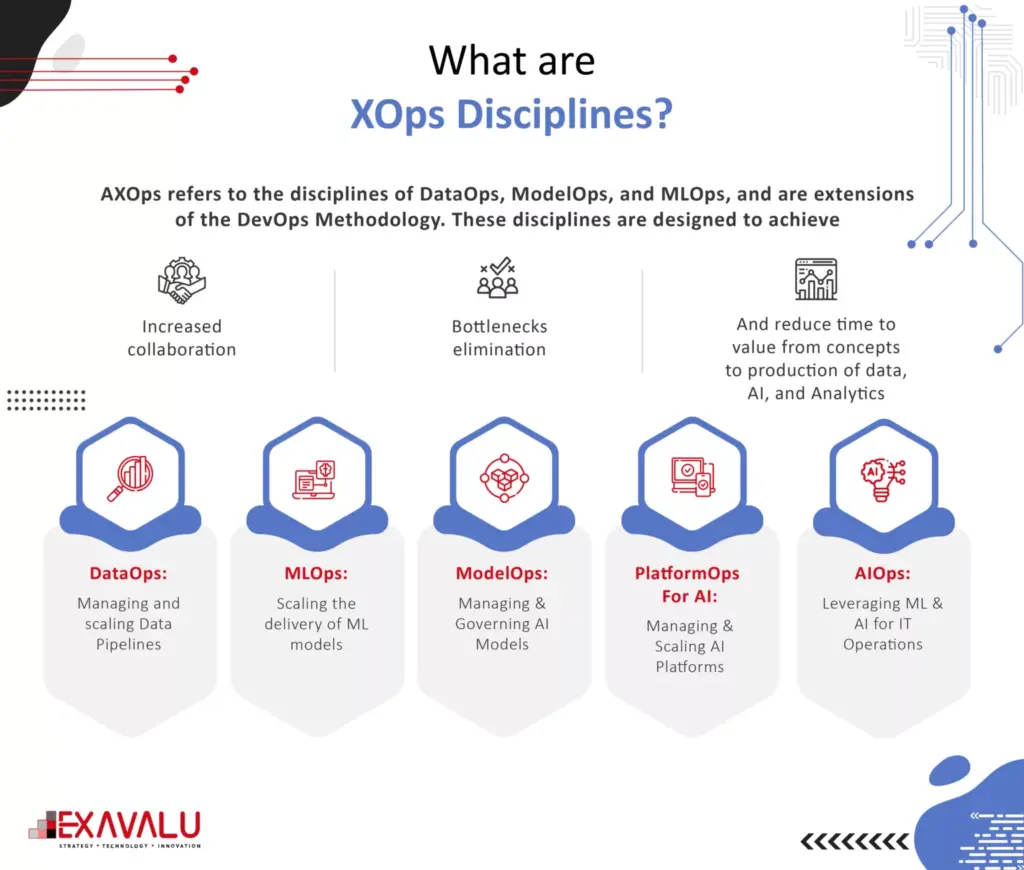
However, scaling data science to achieve these rewards takes time. Successful insurance companies have built an excellent analytical process to create a steady flow of models to tap into this new opportunity. However, getting it wrong can lead to spiraling operational expenses, significant financial and reputational risks, and creating wrong models or misuse.
Successful companies have a holistic approach to increasing efficiency throughout the data science lifecycle. This approach is called Enterprise XOps/MLops, which is a combination of technologies and best practices that streamline the management, development, deployment, and monitoring of data science models at scale across an enterprise. This paper will discuss the challenges of scaling data science and will explain how a poorly defined approach can lead to obstacles and how Enterprise MLops can overcome this challenge.
Scaling Machine Learning is Difficult
Companies leveraging the XOps (DataOps, ModelOps and MLOps) have high expectations from their data science teams, with 25% expecting outcomes that increase revenue by 11% or more. Gartner predicts that by end of 2024, 75% of organizations will shift from piloting to operationalizing their AI usage, driving a 400% increase in streaming data and analytics infrastructures. However, despite large investments, results have not been as successful as expected. Additionally, a significant number of companies plan to scale data science capabilities within the next five years leading to the increased importance of an enterprise MLOps approach that avoids building operational silos. To overcome these obstacles, companies can apply the technical principles of MLOps to the entire data science lifecycle and consider how to apply these efficiencies to processes and people.
Entry Barriers to Scale for Models
Advancements in the last decade in using AI and Models in insurance have focused on building models with little focus on operationalizing machine learning model development at the enterprise using advanced infrastructure management and Dev/Ops automation. There have been many barriers, including analysts and data scientists waiting for data from data engineers, code refactoring for production, fixing data quality issues when developing models, retraining ML models with new training data, waiting for testing to be completed, provisioning environments for analytical workloads, packaging dev outputs for production and fixing outages due to excessive load. It is easier for platforms to solve scaling problems in the back-end production of the data science lifecycle rather than the research and development in the front end. In the back end, the model is already built and packaged as a file, supported by a data pipeline, and often wrapped in a container.
How Enterprise MLOps Scales Data Science
The core capabilities of an Enterprise MLOps platform provide a comprehensive approach for scaling data science for model-driven companies. Such an approach must address data access, model validation, model automation, and monitoring gaps. Enterprises must build models, test, deploy and monitor in a continuous cycle that integrates machine learning, software development, and IT release management and deployment. These capabilities cover four phases of the entire data science lifecycle: manage, develop, deploy, and monitor business outcomes. By providing capabilities for the entire lifecycle, a model-driven business can avoid common mistakes and issues arising from a more limited definition of MLOps. MLOps can operationalize data science at scale.
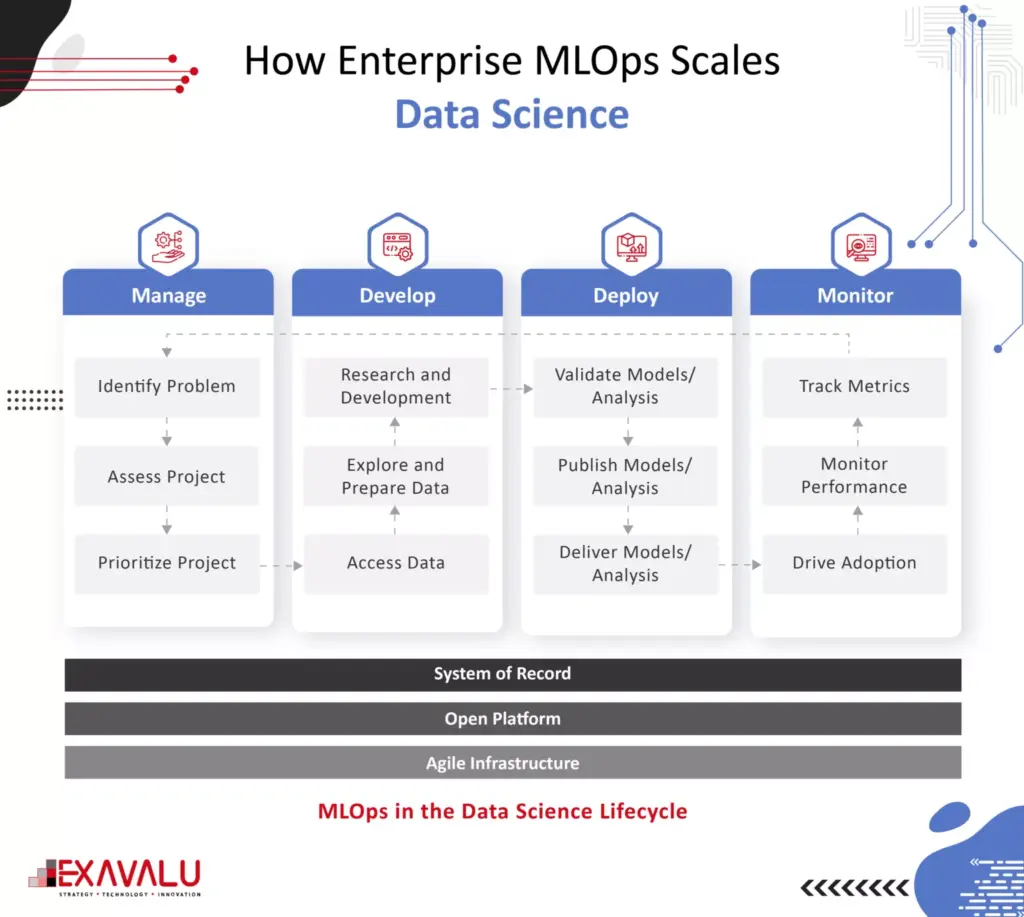
A mitigation plan involves collaborative working in a single team, developing coding standards and best practices, creating metrics and processes around that, using model registries and version control to rerun pipelines, enabling a dynamic sandbox environment utilizing cloud services, and building a continuous deployment pipeline.
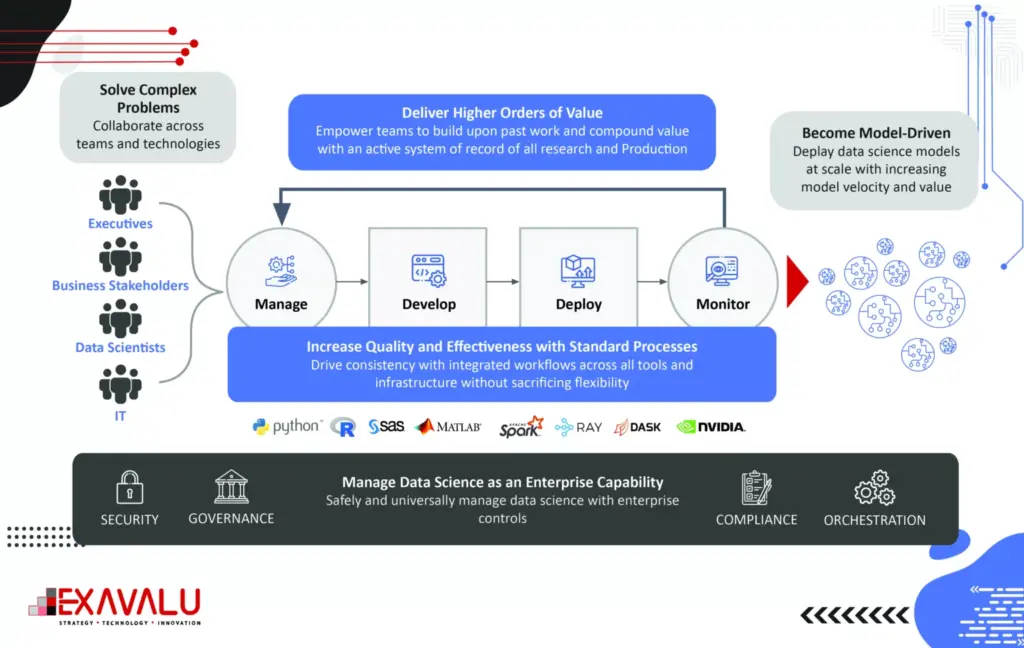
Mlops Capabilities that Organization should bring about
Managing the Data Science Lifecycle is the first phase of the data science lifecycle. A significant objective of this phase is breaking down knowledge silos that keep data scientists from collaborating. Because data scientists often work independently with various tools, there are no standard ways of working, compromising governance, auditability, reproducibility, etc. Apart from creating feature Store solutions, Model development tools, CI/CD and code repository, ML compute engines, workflow and model orchestration, Data model and experiment tools, deployment tools, and monitoring tools are important for a carrier from a capability standpoint. For example, Feature Stores make the data scientist’s work more convenient & efficient by abstracting much of the engineering work required to acquire, transform, store, and use features in ML training and inference. Strong project management capabilities are also essential for scalability in this phase. The managing stage will enable control and collaboration of large stakeholders and facilitate audit and review processes.
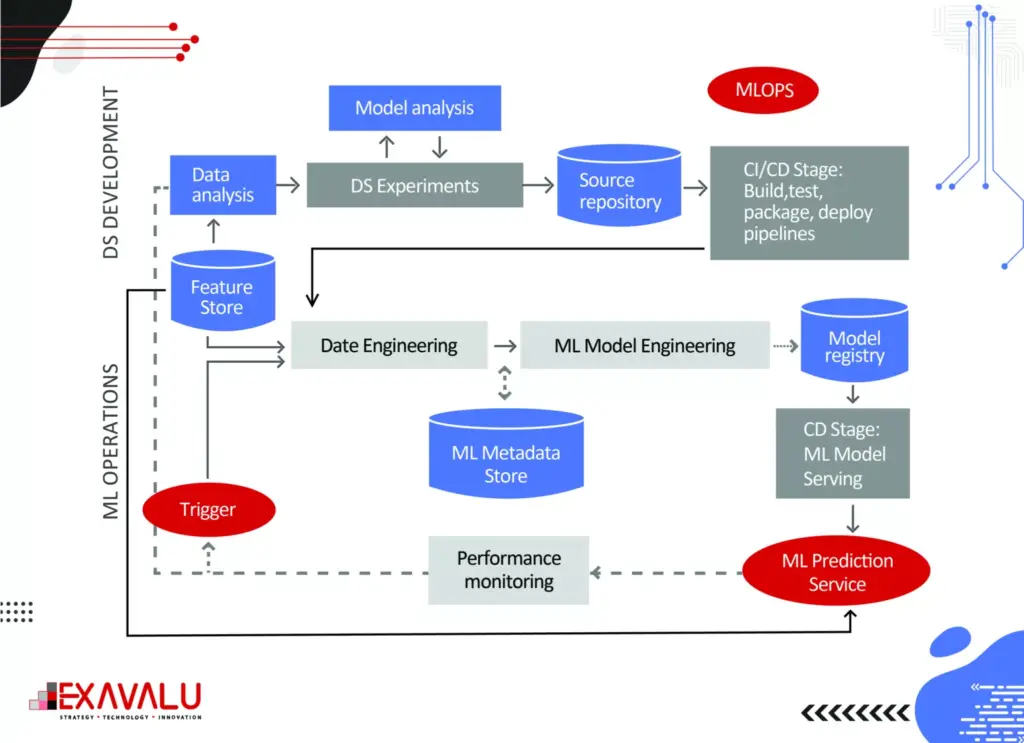
Developing Models for Business Use Cases
In the Development phase of the data science lifecycle, access to the right tools and infrastructure is essential for data scientists to be productive and innovative. When data science teams cannot access the necessary resources, they may create ad-hoc workarounds that involve building and maintaining their local infrastructure, leading to inefficiencies, frustration, and increased operational and security risks. Complex problems arise when sourcing and blending raw, structured, and external/cloud data at scale. Additional complexity arises from inadequate model feature stores, model packaging, and validation capabilities. A new data orchestration approach is available to accelerate the end-to-end ML pipeline. Data orchestration technologies abstract data access across storage systems, virtualize all the data and present the data via standardized APIs and a global namespace to data-driven applications. Data orchestration can already integrate with storage systems; machine learning frameworks only need to interact with a single data orchestration platform to access data from any connected storage. As a result, training can be done on all data from any source, leading to improved model quality. There is no need to move data to a central source manually. All computation frameworks, including Spark, Presto, PyTorch, and TensorFlow, can access the data without concern for where it reside. Key benefits of the platform included shared resources, elimination of silos, centralized access to data for better governance and security, and centralized and shareable environment management, enabling the company to operationalize data science at scale across the organization.
Deploying Models for Production
The Deploy phase is critical for operationalizing models at scale and is traditionally where the highest value is achieved from MLOps. However, many organizations still need help with the model deployment process, which can be time-consuming and require close oversight from IT support staff. An Enterprise MLOps platform can streamline the deployment and change management processes, allowing data scientists to deploy models independently without relying on IT or software developers. This can save time and add value to the business. Given the high levels of AI failure rates, companies need a structured way to manage their models for successful ML applications. Model registry, a tool designed to manage models systematically. A model registry makes collective action easier. Thanks to its centralized storage, the most up-to-date version of all models can be found. Thus, data scientists can avoid the risk of working on overlapping problems or falling into the same mistakes. Being informed of others’ actions both enable joint work and save time. A model registry makes the lifecycle of models transparent. This way, each team member can keep track of a model’s progress. A model registry facilitates model deployment in which models are pushed into production. Data scientists can streamline by tracking, monitoring, comparing, and searching all the models. A model registry can be confused with experiment tracking. However, even though experiment tracking allows tracking different versions of a model and storing training data, they serve different purposes. This allowed them to efficiently deliver customized models.
Monitoring the Model Portfolio for Ongoing Performance
Monitoring is about keeping track of model performance, ensuring that models continuously learn, continually rebuild (CI/CD), and preventing model drift or even the improper use of models. ML model monitoring platform that can boost the observability of your project and helping you with troubleshooting production AI. Automatic model monitoring should be proactive rather than reactive so that you can identify performance degradation or prediction drifts early on. Automated monitoring systems can help you with that, and integrations with tools like PagerDuty or Slack can notify you in real time. It demands zero setups and provides space for easy-to-customize dashboards. While these objectives may seem obvious, many (if not most) enterprises that fail to scale models in production are falling short in the Monitor phase because they are disengaged with systematically ensuring model performance and business outcomes. Enterprise MLOps needs to integrate a strong model maintenance plan to implement monitoring at scale. The risks of ignoring the monitoring responsibilities pose real consequences from wrong models or their improper use – including significant monetary and brand reputation risks. Model maintenance should make it easy to trace the history of models and quickly reproduce them in follow-up experiments, tuning, and re-validation. They are improving their model monitoring capability. It infuses data science across its operations to provide consumers with a better, faster insurance experience. The company adopted Enterprise MLOps technology and practices to get insights into how models perform in real-time and detect data and model drift once models are in production. The new approach saves us significant time previously spent on maintenance and investigation and enables us to monitor model performance in real time and compare it to our expectations. In one case, they could automatically detect drift that had previously taken three months to identify manually.
Conclusion
In summary, MLOps or Machine Learning Operations is a concept that aims to improve the collaboration and automation of the entire data science lifecycle, from research and development to deployment and maintenance.
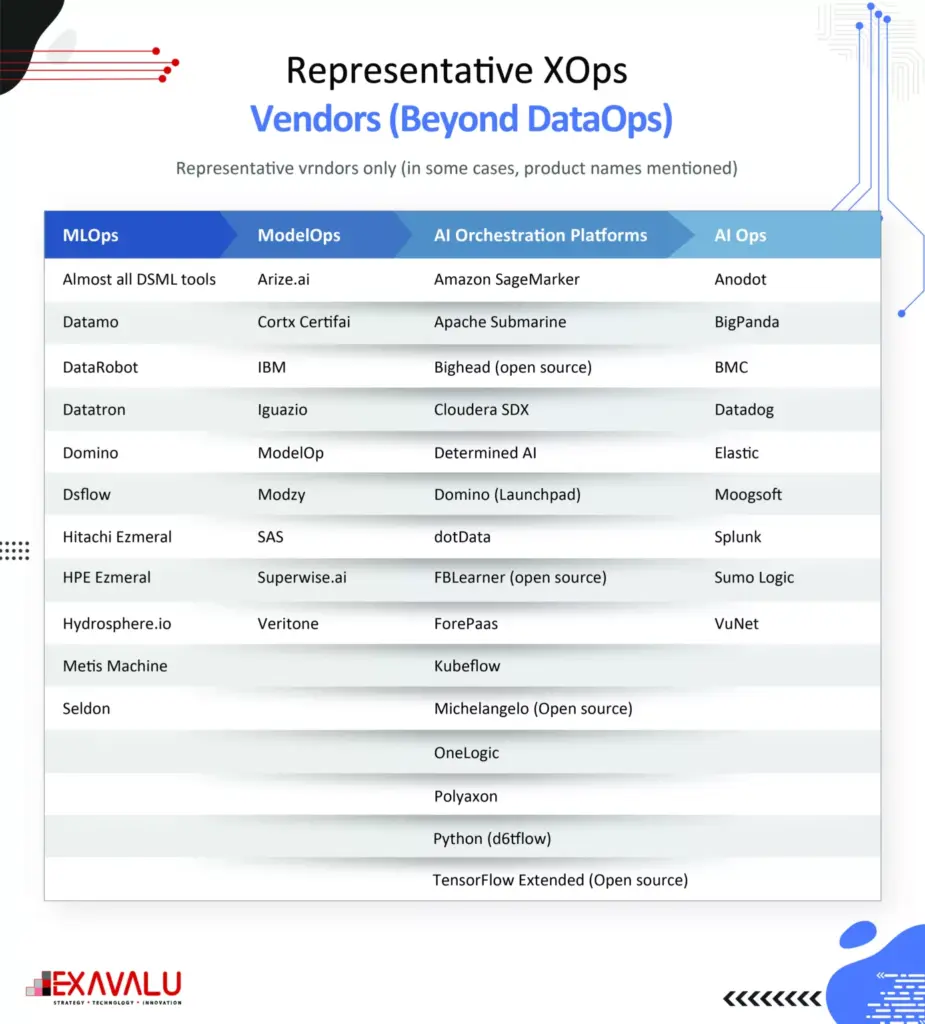
However, there is an essential enabling capability on the Dataops side of the house, which is modern tools for batch and streaming data ingestion and also advanced tools for data quality monitoring and tools for data transformation. The traditional definition of MLOps is limited to the back end, focusing on the deployment and maintenance of models. However, a more comprehensive definition of MLOps, known as Enterprise MLOps, applies to the entire data science lifecycle, including the front-end R&D phase and the back-end model creation and management. By addressing the challenges and obstacles in the R&D phase, such as silos, resources, governance, software, security, visibility and lineage, an Enterprise MLOps platform can help organizations to achieve scalability in data science and realize the ROI they hope for the business.